The use of amplification technologies is an integral part of contemporary guitar practice, given the dynamic limitations of the classical guitar and the organological specificity of the electric guitar. Yet traditional loudspeaker-based strategies pose significant perceptual and musical constraints, rooted in a structural disjunction between acoustic and electroacoustic sound diffusion. Spherical amplification through outward-radiating loudspeaker arrays offers a radical alternative — not only overcoming these limitations but reconceiving how we sense and engage with electroacoustic sound.
The research proceeds from an understanding of instrumental interpretative practice as grounded in a corporeal conception of sound, as a directionally complex radiation field shaped by and in reciprocal continuity with the performer’s gesture, the architectural environment in which it unfolds, and the listening bodies it reaches. Conventional loudspeakers, approximating point sources with fixed radiation characteristics, are structurally unable to render this complexity — compromising not merely sound quality but the very conditions of existence of such practice.
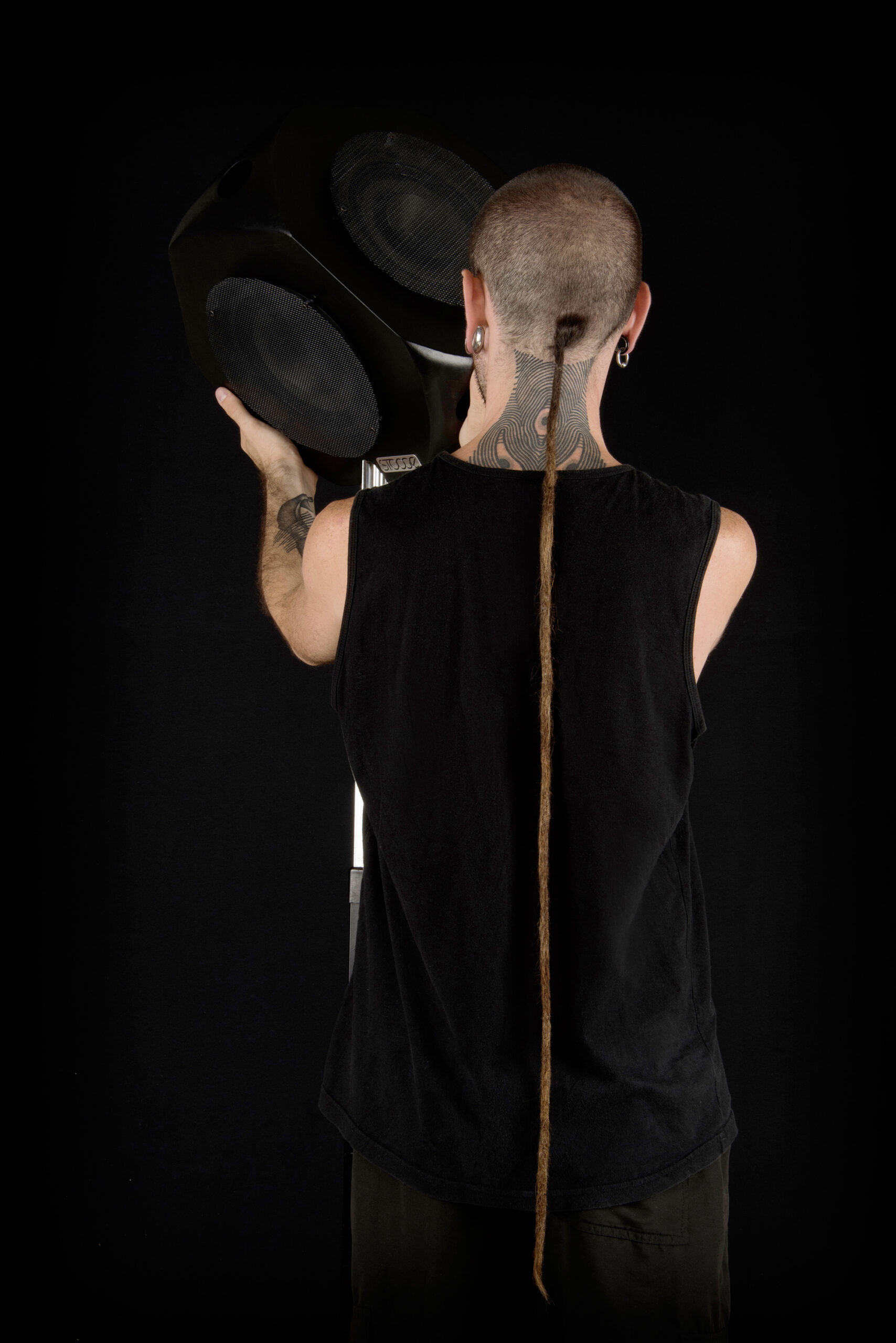
Following preliminary research conducted at the Institute for Computer Music and Sound Technology of ZHdK in Zurich and the Hochschule für Musik Basel, spherical amplification proved to be an effective response to these challenges. In April 2023, through collaboration with electroacoustic musician and researcher Giuseppe Silvi (LEAP Rome), S.T.OOGE was born — a tetrahedral loudspeaker prototype based on outward-radiating first-order Ambisonics, specifically designed for guitar amplification.
This research investigates the renewed performative scope opened by S.T.OOGE through a practice-based approach grounded in extensive concert practice spanning solo, chamber, and ensemble performances across diverse spaces and repertoires, and informed by sustained collaboration with composers. The ongoing hardware and software development of S.T.OOGE unfolds alongside this practice, in continual dialectic exchange between artistic needs and technological drive. The research aims to interrogate what this practice reveals about the very conditions of musical interpretation, and to provide the technical and intellectual tools for a renewed understanding of the performer’s agency in the electroacoustic instrumental domain.
Since November 2023, the research has been conducted as part of my PhD in Artistic Research in Music at the Malmö Academy of Music, Lund University.
The use of amplification technologies is an integral part of contemporary guitar practice, given the dynamic limitations of the classical guitar and the organological specificity of the electric guitar. Yet traditional loudspeaker-based strategies pose significant perceptual and musical constraints, rooted in a structural disjunction between acoustic and electroacoustic sound diffusion. Spherical amplification through outward-radiating loudspeaker arrays offers a radical alternative — not only overcoming these limitations but reconceiving how we sense and engage with electroacoustic sound.
The research proceeds from an understanding of instrumental interpretative practice as grounded in a corporeal conception of sound, as a directionally complex radiation field shaped by and in reciprocal continuity with the performer’s gesture, the architectural environment in which it unfolds, and the listening bodies it reaches. Conventional loudspeakers, approximating point sources with fixed radiation characteristics, are structurally unable to render this complexity — compromising not merely sound quality but the very conditions of existence of such practice.
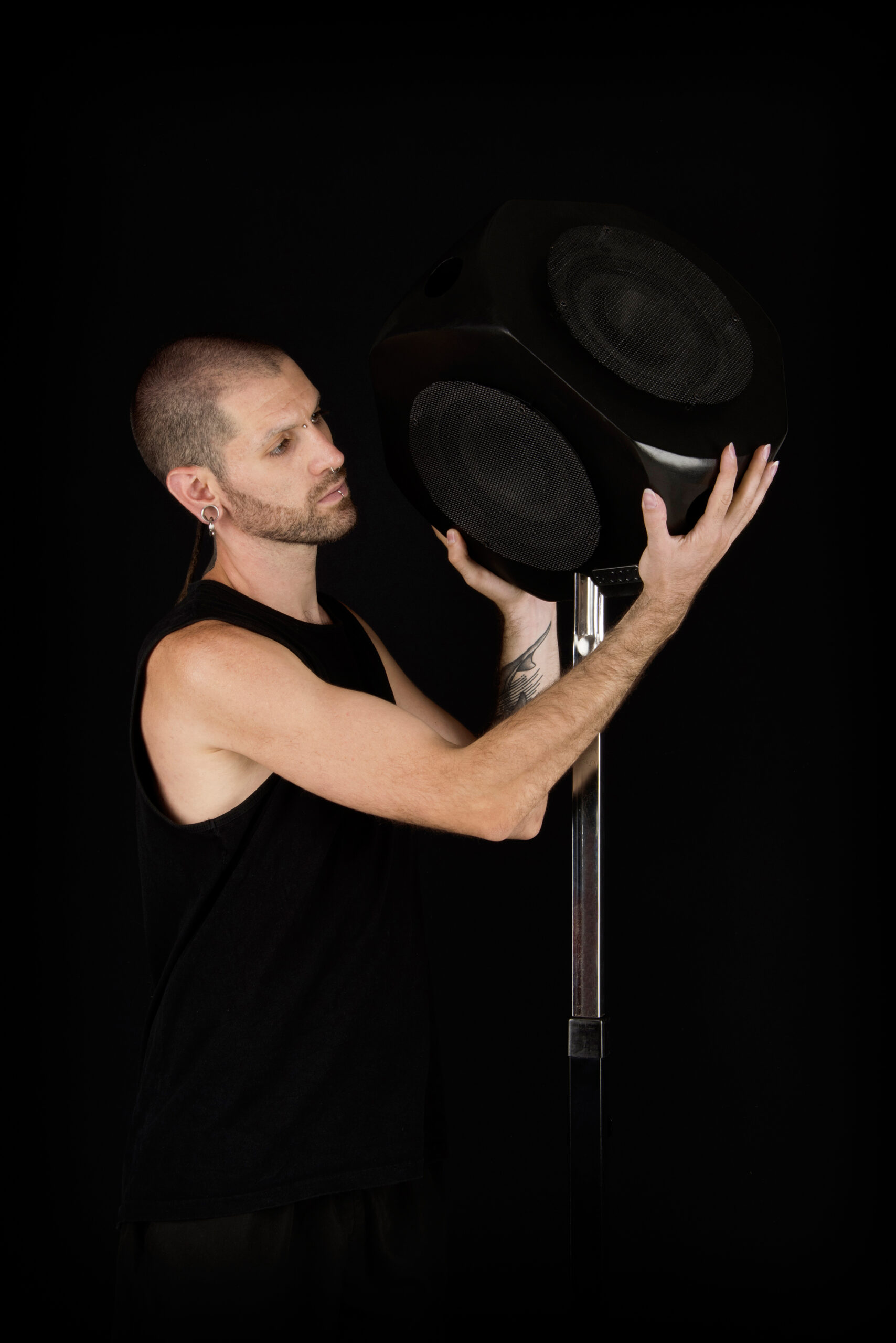
Following preliminary research conducted at the Institute for Computer Music and Sound Technology of ZHdK in Zurich and the Hochschule für Musik Basel, spherical amplification proved to be an effective response to these challenges. In April 2023, through collaboration with electroacoustic musician and researcher Giuseppe Silvi (LEAP Rome), S.T.OOGE was born — a tetrahedral loudspeaker prototype based on outward-radiating first-order Ambisonics, specifically designed for guitar amplification.
This research investigates the renewed performative scope opened by S.T.OOGE through a practice-based approach grounded in extensive concert practice spanning solo, chamber, and ensemble performances across diverse spaces and repertoires, and informed by sustained collaboration with composers. The ongoing hardware and software development of S.T.OOGE unfolds alongside this practice, in continual dialectic exchange between artistic needs and technological drive. The research aims to interrogate what this practice reveals about the very conditions of musical interpretation, and to provide the technical and intellectual tools for a renewed understanding of the performer’s agency in the electroacoustic instrumental domain.
Since November 2023, the research has been conducted as part of my PhD in Artistic Research in Music at the Malmö Academy of Music, Lund University.